
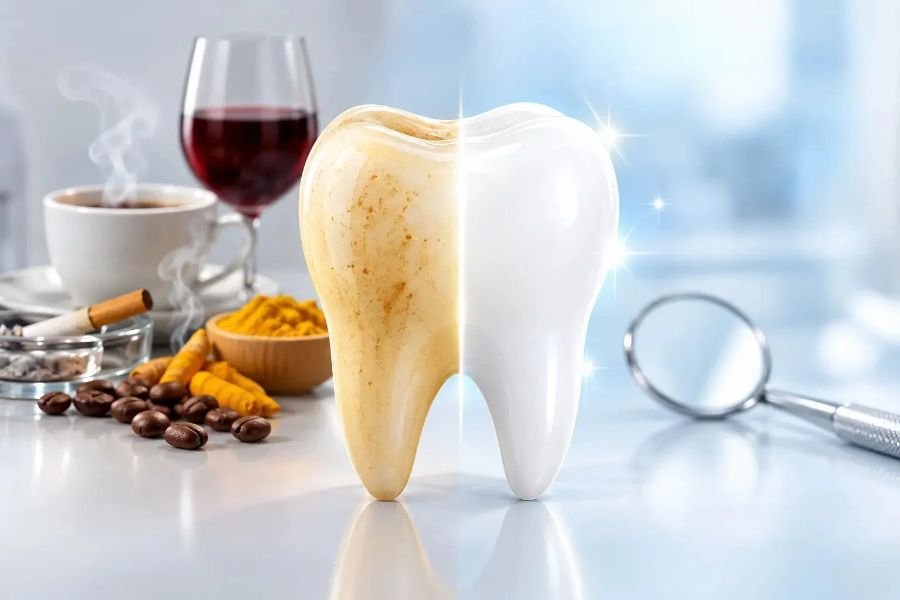

Coffee, tea, turmeric, and time all leave a mark on your teeth, slowly that you barely notice until a photo catches it. Professional whitening undoes most of that in a single visit, safely and without guessing at a drugstore kit.
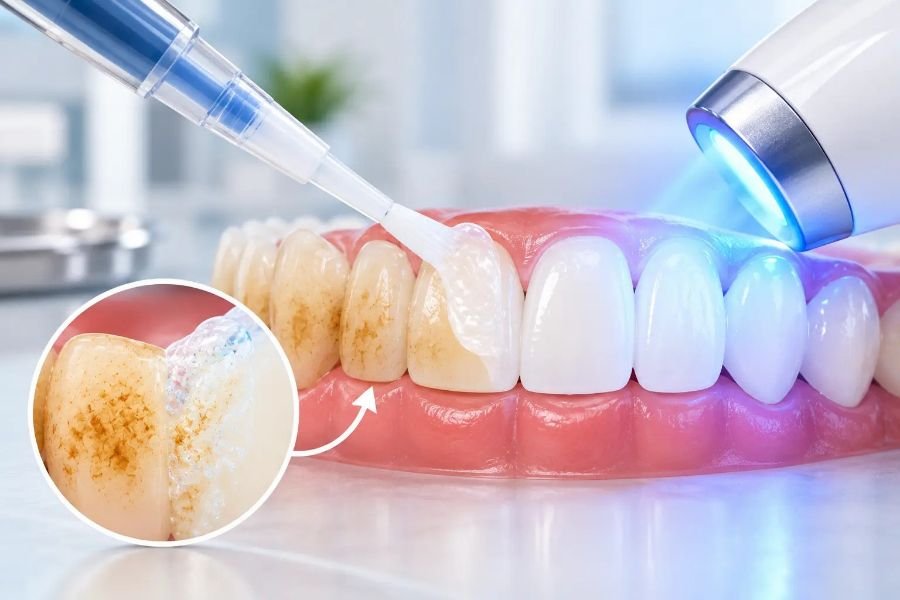
A bleaching gel, stronger than anything available over the counter, is applied to your teeth and activated to break down the stains built up in the enamel. Done under a dentist’s supervision, it lifts years of discolouration in a single visit, with the shade and sensitivity monitored throughout rather than left to guesswork.
Teeth don’t stain overnight, which is exactly why most people don’t notice until the change is already significant. Every cup of chai, every glass of wine, years of it, settles gradually into the enamel. By the time it’s obvious in photos or next to someone else’s smile, it’s been building for a long time.
The appeal of professional whitening is how disproportionate the result is to the effort. A single visit can undo years of that gradual staining, safely, and with a dentist checking your teeth and gums beforehand to make sure whitening is actually the right call, rather than masking a problem that needs a different kind of attention.

Teeth yellowed by coffee, tea, turmeric, smoking, or simply age respond well to whitening. Healthy teeth and gums with no active decay are the best starting point.

Grey or dark stains caused by root canal treatment, medications, or injury may need a veneer or crown. Existing crowns, veneers, and fillings won't whiten, which can affect the final colour match.

Brush twice daily, maintain regular dental check-ups, avoid stain-causing foods and drinks, and follow your dentist's advice to help your whitening results last longer and keep your smile bright.
Curious whether your teeth are a good fit? That’s exactly what the first visit is for.

Dr. Mathur checks that your teeth and gums are healthy enough for whitening, and talks through what shade of improvement is realistic for your teeth specifically.

Your gums and soft tissue are shielded before the whitening gel is applied, so only the teeth are affected.

A professional-strength gel is applied and left to work, sometimes activated further, for a set period during the visit.

Your new shade is compared against where you started, and you'll leave with clear guidance on what to avoid for the next day or two to help the result hold.

Dr. Rajat Mathur combines clinical expertise, modern dental technology, and a patient-first approach to provide comprehensive dental care designed around your comfort, oral health, and long-term smile.
Most in-office whitening is completed in a single visit, typically under an hour of actual treatment time, though the exact length depends on your starting shade and the result you're after.
Commonly several months to a couple of years, depending on your diet and habits, coffee, tea, red wine, and smoking all speed up new staining. Occasional top-ups can help maintain the shade over time.
No, not when done professionally and supervised by a dentist. Over-the-counter kits used without guidance carry more risk of sensitivity and uneven results, which is part of why a professional visit is worth it.
No. Those materials don't respond to whitening gel, so an existing crown or veneer on a front tooth will stay its original shade while the natural teeth around it brighten. Worth flagging at your consultation if this applies to you.
Some temporary sensitivity to hot or cold is common for a day or two afterward, but it's not typically painful during the procedure itself. Dr. Mathur will talk you through what's normal to expect.
Staining from an old root canal, certain medications, or an injury sits deeper in the tooth structure than surface staining and generally doesn't lift with standard whitening. A veneer or crown is usually a better fix for that kind of discolouration.
It's best to avoid strongly coloured food and drink, coffee, tea, red wine, turmeric, for a day or two afterward, since teeth are slightly more porous right after treatment and can pick up new staining more easily.
Often, yes. Many patients whiten first and use that brighter shade as the baseline for any veneers or bonding that follow, so everything ends up matching. See our Smile Makeover page if you're considering more than one treatment together.