
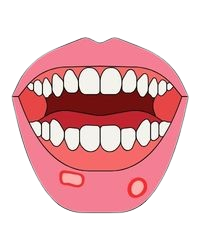
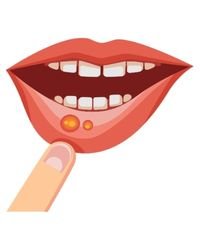
That sore spot making every meal a small negotiation? Most mouth ulcers heal on their own within a week or two. The ones that don't, or that keep coming back in the same place, are worth a proper look, since not every sore in your mouth is a simple ulcer.
A mouth ulcer is a small, painful sore on the soft tissue inside your mouth, on the cheeks, lips, tongue, or gums. Most are aphthous ulcers, commonly called canker sores, which aren’t contagious and usually heal within one to two weeks without treatment. An ulcer that lasts longer than three weeks, keeps coming back, or grows larger is worth a dentist’s attention rather than waiting it out.
A mouth ulcer usually isn’t a big deal. It stings for a few days, you avoid chewing on that side, and it quietly heals on its own. Most people never think to mention it to a dentist, and most of the time, they don’t need to. The exception is the ulcer that doesn’t play by those rules: one that’s still there three weeks later, one that keeps showing up in the exact same spot, or one that doesn’t actually hurt much even though it looks like it should. Those patterns are worth a look, not because they’re usually serious, but because a dentist can tell you quickly whether it’s a straightforward ulcer, something rubbing against a sharp tooth or filling, or, occasionally, something that needs a closer check.

The Everyday Kind Small, round, pale sores with a red border, usually under a centimetre across. The most common type by far. Heal on their own in seven to ten days and don't leave a scar.

Larger and deeper than the minor kind, often over a centimetre, and slower to heal, sometimes taking several weeks. More painful, and more likely to need a dentist's help to settle down.

Caused by something physically irritating the tissue: a bite from your own cheek, a sharp edge on a tooth or filling, a denture that doesn't sit quite right, or a brace wire catching the same spot. These usually clear up once the cause is fixed, not just the symptom.
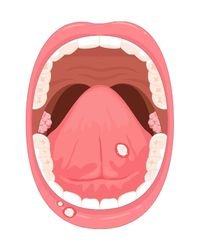
Stress, hormonal changes, certain foods (citrus, spicy dishes, and some packaged foods are common triggers), and low levels of vitamin B12, iron, or folate can all make ulcers more frequent or harder to shift. Recurring ulcers are often where this is worth investigating.

Dr Mathur examines the ulcer and asks about how long it's been there, whether it's happened before, and anything that might be triggering it, including diet and any sharp edges in your mouth.

If a sharp tooth, rough filling, denture, or brace wire is rubbing against the spot, that gets smoothed or adjusted so the irritation actually stops, not just the pain for a day.

A topical gel or medicated mouth rinse to ease the pain and support healing, applied right at the visit where useful.

For unusual, painless, large, or persistent ulcers, Dr. Mathur may recommend blood tests for deficiencies and, rarely, a small biopsy to identify the cause.

Dr. Rajat Mathur combines clinical expertise, modern dental technology, and a patient-first approach to provide comprehensive dental care designed around your comfort, oral health, and long-term smile.
No. Aphthous ulcers, the common canker-sore type, aren't contagious, so you can't catch or spread them. This is different from a cold sore caused by the herpes virus, which appears on the lips rather than inside the mouth and is contagious.
Common triggers include minor injury from biting or a sharp tooth edge, certain foods like citrus or spicy dishes, stress, hormonal changes, and low levels of vitamin B12, iron, or folate. If they're recurring often, it's worth having the pattern checked rather than treating each one as its own event.
A warm salt-water rinse a few times a day, avoiding spicy or acidic food that irritates the area, and being gentle with brushing around the spot all help. If it's still painful or hasn't improved after a week, a visit is a better next step than waiting longer.
Most ulcers are nothing to worry about. The patterns worth getting checked are an ulcer lasting more than three weeks, one that's unusually large, one that doesn't hurt much despite how it looks, or one that keeps returning in the same exact spot.
Yes. Constant rubbing from a sharp tooth edge, a rough filling, an ill-fitting denture, or a brace wire is one of the most common causes of a persistent ulcer, and it won't fully heal until that source of irritation is fixed.
Not always, but it's common enough that it's worth checking. Low vitamin B12, iron, or folate can make ulcers show up more often or take longer to heal, and a simple blood test can confirm it.
Yes, and it's common. Most are the same minor aphthous type adults get and heal on their own within a week or two. One that lingers well past that, or that seems unusually painful, is worth a dentist's look.
No. Most ulcers are treated with a topical gel or rinse, and adjusting a sharp tooth or denture edge is quick and painless. A biopsy, on the rare occasion it's needed, is done under local anaesthesia.