
Preventive Dentistry in Delhi
The Cheapest Dental Work Is the Work You Never Need
A root canal costs more than a cleaning, in money and in time in the chair. Most of what sends people in for bigger procedures was once small enough to catch at a routine check-up. That’s the entire case for preventive care in one sentence.
What is preventive dentistry?
Preventive dentistry is everything that stops a dental problem from starting, or catches it while it’s still small: regular check-ups, professional cleanings, X-rays, fluoride treatment, and sealants. It’s the opposite of waiting for pain to show up before seeing a dentist, and it’s almost always cheaper, faster, and less uncomfortable than the alternative.
Why This Matters
Most dental problems don’t start big. A cavity begins as a spot smaller than a grain of rice. Gum disease starts as gums that bleed a little when you brush, easy to miss, easy to ignore. Left alone, either one builds quietly for months, sometimes years, before it turns into something you can’t avoid noticing: a toothache, a swollen gum, a tooth that suddenly needs a root canal instead of a filling. A regular check-up exists to catch exactly that window, the point where a problem is still small enough to fix simply. It’s also when your toothbrush and floss stop being enough on their own. Plaque hardens into tartar in places daily brushing can’t reach, and only a professional cleaning actually removes it. Skip that step for long enough, and the gums underneath start to pay for it.
What is preventive dentistry?

Routine
Check-Ups
A thorough look at your teeth, gums, and mouth to catch early signs of decay, gum disease, bite problems, or anything else before it becomes a bigger issue. This is where small problems get caught while they're still small.
Professional Cleaning
Plaque and tartar build up in places a toothbrush and floss can't fully reach, and once tartar has hardened, only a professional cleaning removes it. Regular cleanings also help gums stay healthy and leave teeth visibly brighter.

Dental
X-Rays
Shows what's happening below the surface and between teeth, decay that hasn't broken through yet, bone loss from gum disease, or an issue with a tooth root, none of which are visible to the eye alone.

Fluoride
Treatment
Strengthens enamel and helps it resist the early stages of decay. Especially useful for children's developing teeth, but valuable at any age.
Dental
Sealants
A thin protective coating applied over the deep grooves of the back teeth, where cavities most often start, particularly useful for children's new permanent molars.


Routine
Check-Ups
A thorough look at your teeth, gums, and mouth to catch early signs of decay, gum disease, bite problems, or anything else before it becomes a bigger issue. This is where small problems get caught while they're still small.

Professional Cleaning
Plaque and tartar build up in places a toothbrush and floss can't fully reach, and once tartar has hardened, only a professional cleaning removes it. Regular cleanings also help gums stay healthy and leave teeth visibly brighter.

Fluoride
Treatment
Strengthens enamel and helps it resist the early stages of decay. Especially useful for children's developing teeth, but valuable at any age.

Fluoride
Treatment
Strengthens enamel and helps it resist the early stages of decay. Especially useful for children's developing teeth, but valuable at any age.

Dental
Sealants
A thin protective coating applied over the deep grooves of the back teeth, where cavities most often start, particularly useful for children's new permanent molars.
Is It Time for a Check-Up?
- It's been more than six months since your last dental visit
- You've noticed any bleeding when you brush or floss
- Food keeps getting stuck in the same spot
- You can feel tartar build-up or a rough patch on a tooth
- Your breath has been off more often than usual
- You're simply not sure when you last had a proper cleaning
What Happens at Your Visit

A thorough
exam
Dr. Mathur checks your teeth, gums, and bite, and takes X-rays where needed to see what isn't visible on the surface.

Professional
cleaning
Plaque and tartar are removed from areas daily brushing can't reach, followed by a polish that leaves teeth feeling genuinely clean.
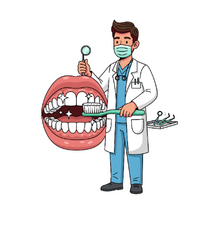
Fluoride or sealants, where useful
If your teeth would benefit from extra protection, particularly for children, this is added as part of the same visit.

A plan, not
just a verdict
If anything needs attention, you'll leave with a clear idea of what it is and what to do next, not just a list of problems.

- Dr. Rajat Mathur
Advanced Dental Care & Smile Transformation in East Delhi
Dr. Rajat Mathur combines clinical expertise, modern dental technology, and a patient-first approach to provide comprehensive dental care designed around your comfort, oral health, and long-term smile.
- Experienced Dental Surgeon & Smile Expert
- Advanced & Minimally Invasive Dental Care
- Personalized Treatment for Every Smile
Trusted by Patients, Proven by Smiles
Frequently Asked Questions
Every six months for most people, so small issues get caught while they're still simple to treat. If you've had gum disease or frequent cavities before, more frequent visits can be worth it.
Brushing and flossing can't fully reach every surface, and once plaque hardens into tartar, it's stuck there until it's professionally removed. A cleaning gets the spots your daily routine physically can't.
No. X-rays are taken based on what's actually needed to see, not as a routine add-on every time. Dr. Mathur will explain why one's being recommended if it is.
It's most commonly recommended for children's developing teeth, but adults with a higher risk of decay, or sensitive teeth, can benefit from it too.
Sealants are a thin coating placed over the deep grooves of the back teeth to prevent cavities from starting there. They're most often used for children's new permanent molars, though an adult with deep, cavity-prone grooves can benefit as well.
It's never too late. A first check-up after a long gap simply gives you an honest picture of where things stand, and from there, regular visits are what keep small issues from turning into bigger ones.
Most patients find a routine cleaning comfortable, with some mild sensitivity afterward if the gums were inflamed to begin with. It gets noticeably easier with each regular visit as gum health improves.
Generally, yes. A cavity caught early needs a simple filling. The same cavity left untreated can turn into a root canal, or worse, needing the tooth removed and replaced, all of which cost more in time, money, and discomfort than a routine check-up would have.