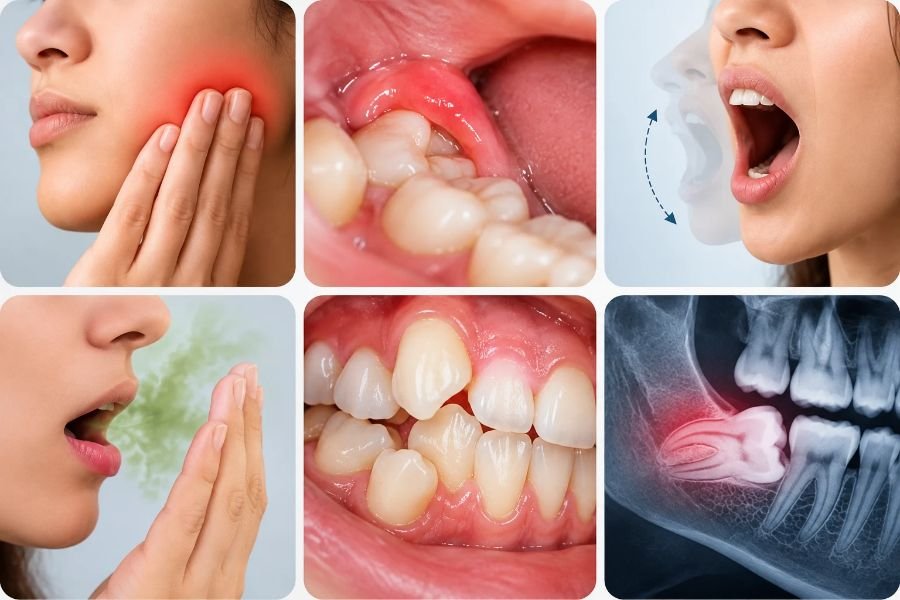
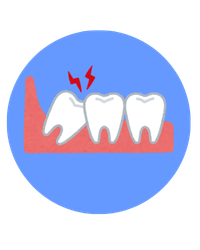
Wisdom teeth arrive last, and there's often not enough room waiting for them. When they come in sideways, get stuck halfway, or crowd the teeth next to them, removal is usually the cleanest way to stop the problem from getting worse.

Wisdom teeth are the third and final set of molars, usually emerging between the late teens and mid-twenties. By the time they arrive, there's often not enough room left in the jaw, so they can come in at an angle, get partially stuck beneath the gum, or push against the tooth next to them, any of which can cause pain, swelling, or infection.
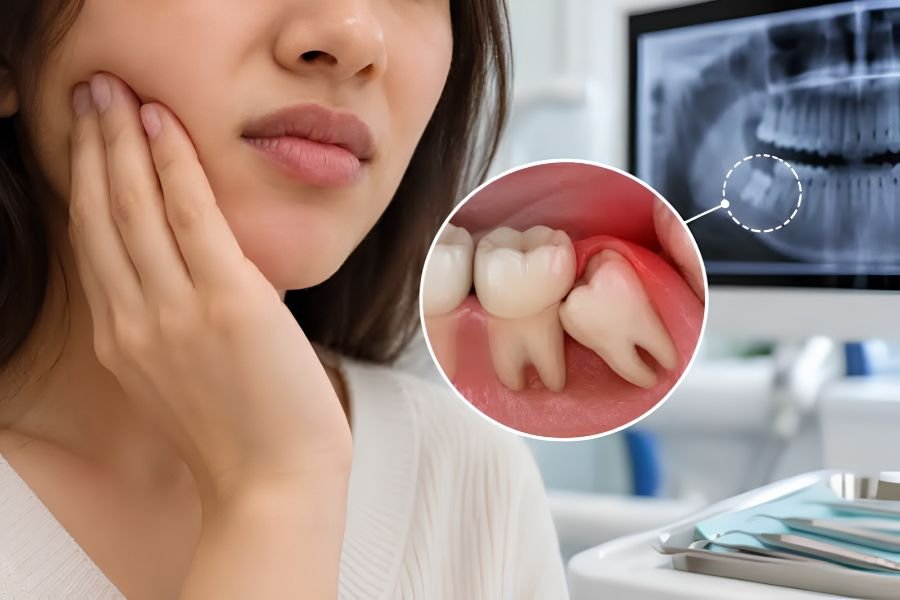
A wisdom tooth doesn’t need to be causing pain right now to be worth paying attention to. One that’s partially erupted, with just a flap of gum covering part of it, creates a pocket where food and bacteria collect and are genuinely hard to clean properly, which is exactly the kind of spot infection tends to start.
An impacted wisdom tooth, one that’s stuck beneath the gum or bone at an angle, can also quietly push against the molar next to it, sometimes damaging that tooth’s root or encouraging crowding elsewhere in the jaw. These problems tend to build gradually, not suddenly, which is part of why a check now, before real pain shows up, is worth more than it might seem.
Recognise any of these? It’s worth having it assessed rather than waiting for it to become an emergency.

Dr Mathur examines the tooth and takes an X-ray to understand its position, angle, and how complex the extraction is likely to be.

Local anaesthesia ensures full comfort. For more complex or anxiety-inducing cases, conscious sedation is also available.

A straightforward tooth is removed directly. An impacted tooth may need a small surgical procedure to access and remove it safely.

You'll leave with clear instructions on managing swelling, eating, and keeping the area clean while it heals over the following days.

Dr. Rajat Mathur combines clinical expertise, modern dental technology, and a patient-first approach to provide comprehensive dental care designed around your comfort, oral health, and long-term smile.
No. A wisdom tooth that's fully erupted, properly aligned, and easy to keep clean can often be left alone. Removal is recommended when a tooth is impacted, causing pain, or likely to cause problems down the line.
The extraction itself is done under local anaesthesia, so you shouldn't feel pain during the procedure. Some swelling and discomfort for a few days afterward is normal and manageable with the aftercare guidance you'll be given.
Most people feel largely back to normal within a few days to a week, though full healing of the gum tissue can take a few weeks longer.
A simple extraction is for a tooth that's fully visible and accessible. A surgical extraction is needed when a tooth is impacted, stuck beneath the gum or bone, and requires a small procedure to access it safely.
Yes, conscious sedation is available alongside local anaesthesia for patients who are anxious or having a more complex extraction. See our Conscious Sedation page for more.
Soft, cool foods for the first day or two, avoiding anything hot, hard, or that requires significant chewing near the extraction site while it begins to heal.
It can continue to push against the neighbouring tooth, contribute to crowding, or become a source of recurring infection in the gum around it. These issues tend to build gradually rather than resolve on their own.
An X-ray is the reliable way to confirm this, showing the tooth's exact position and angle beneath the gum or bone, which isn't always visible or obvious otherwise.