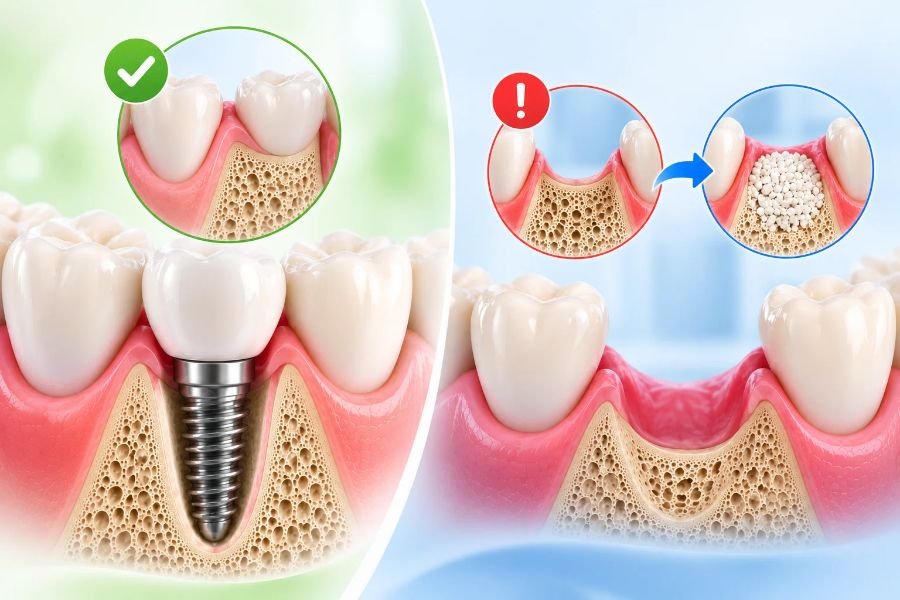
A missing tooth doesn't have to mean grinding down healthy teeth beside it to anchor a bridge, or wearing something removable. An implant replaces the tooth root itself, so the result stands on its own.

A dental implant is a titanium post surgically placed into the jawbone where a tooth root used to be, which fuses with the bone over time and acts as a stable foundation for a crown fitted on top. Unlike a bridge, it doesn't involve or rely on the teeth next to it, and unlike a denture, it isn't removable.
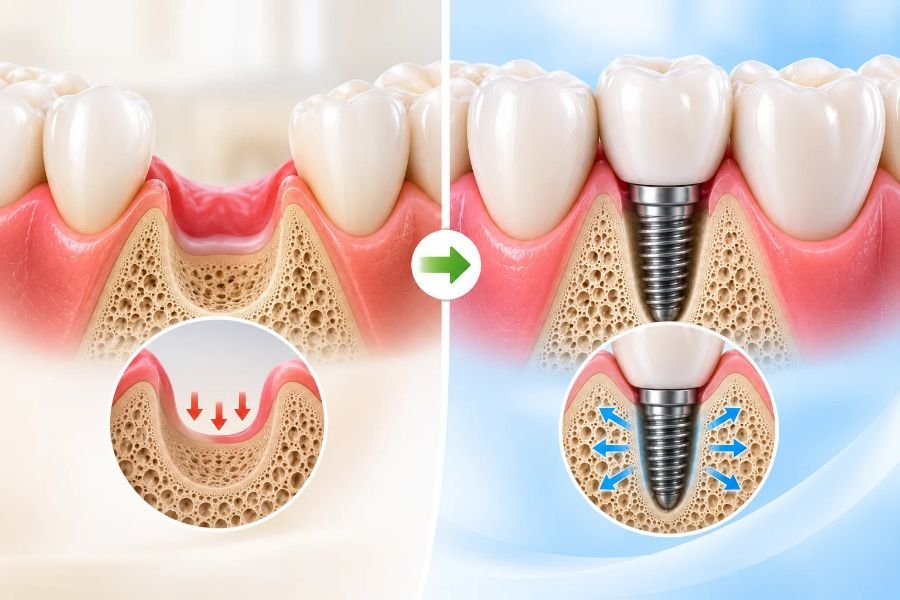
A missing tooth leaves more than a visible gap. The jawbone underneath it depends on the pressure of chewing to stay strong, and without a tooth root there to provide that, it gradually starts to shrink. Over months and years, that bone loss can change the shape of your jaw and face, not just the smile people can see.
An implant is the one replacement option that actually addresses this, because it replaces the root, not just the visible tooth. The bone has something to bond to again, chewing pressure gets distributed the way it naturally would, and the teeth beside the gap are left completely untouched, no filing down healthy teeth just to anchor a bridge.
Good Candidates Generally healthy adults with enough jawbone density in the area, healthy gums, and no uncontrolled conditions that would affect healing, like unmanaged diabetes.
Cases That Need Extra Steps First Significant bone loss in the area can usually still be addressed, often with a bone graft to rebuild the foundation before the implant is placed. Active gum disease is typically treated first, since the implant needs healthy tissue around it to succeed.

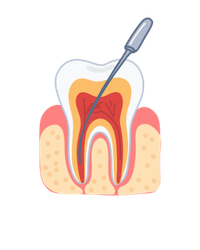
Dr. Mathur examines your jawbone and gums, often with a scan, to confirm an implant is suitable and to plan exactly where it will go.

Under local anaesthesia, the titanium post is placed into the jawbone. Discomfort afterward is usually manageable and settles within a few days.

Over the following months, the implant gradually fuses with the surrounding bone, a process called osseointegration, which is what gives it its long-term stability.

Once healing is confirmed, a custom crown, matched to your natural teeth, is attached to the implant, completing the tooth.
Curious whether you’re a good candidate? That’s exactly what the first consultation is for.
Dr. Rajat Mathur combines clinical expertise, modern dental technology, and a patient-first approach to provide comprehensive dental care designed around your comfort, oral health, and long-term smile.
The placement is done under local anaesthesia, so you shouldn't feel pain during the procedure. Some soreness and swelling for a few days afterward is normal and manageable with standard pain relief.
From placement to final crown, the full process typically spans a few months, mostly healing time while the implant fuses with the jawbone. Dr. Mathur will give you a realistic timeline based on your case.
With good oral hygiene and regular check-ups, implants commonly last 15 to 20 years or longer, often a lifetime. The crown on top may need eventual replacement due to normal wear.
A bone graft can often rebuild the area enough to support an implant. This adds some time to the overall process but doesn't rule out the option.
Each has its place. An implant doesn't touch the neighbouring teeth and helps preserve the jawbone, but involves surgery and more time. A bridge is faster and non-surgical but relies on the teeth beside the gap. See our Crowns and Bridges page for that comparison.
It's uncommon when the candidate is well-suited and the area heals properly, but factors like uncontrolled diabetes, smoking, or poor oral hygiene can affect success. This is part of why the initial assessment matters.
No. Once the crown is fitted, it's shaped and shaded to match your natural teeth, and functions the same way for biting and chewing.
Sometimes, depending on the condition of the socket and surrounding bone. In other cases, it's better to let the area heal first. Dr. Mathur will advise based on your specific situation.